The focus of our group is on design, synthesis, and characterization of inorganic materials to discover technologically relevant novel materials and to understand and control the structure–property relationship. Of particular interest are materials for electrochemical energy storage applications. Primary research interests are (but not limited to) the following:
-
Layered Oxides and NASICON type Electrodes for Li and Na Batteries
We focus on designing, synthesizing, and optimizing P2, P3, O3, and biphasic layered oxide positive electrodes to achieve reversible anionic redox and superior structural stability. By carefully engineering the composition, such as through targeted doping, adjusting the sodium content, or calcination conditions, we aim to enhance energy density and cycle life significantly.
Apart from providing fundamental insights into high-performance electrode materials, these approaches are critical to developing cost-effective, commercially viable sodium-ion energy storage systems.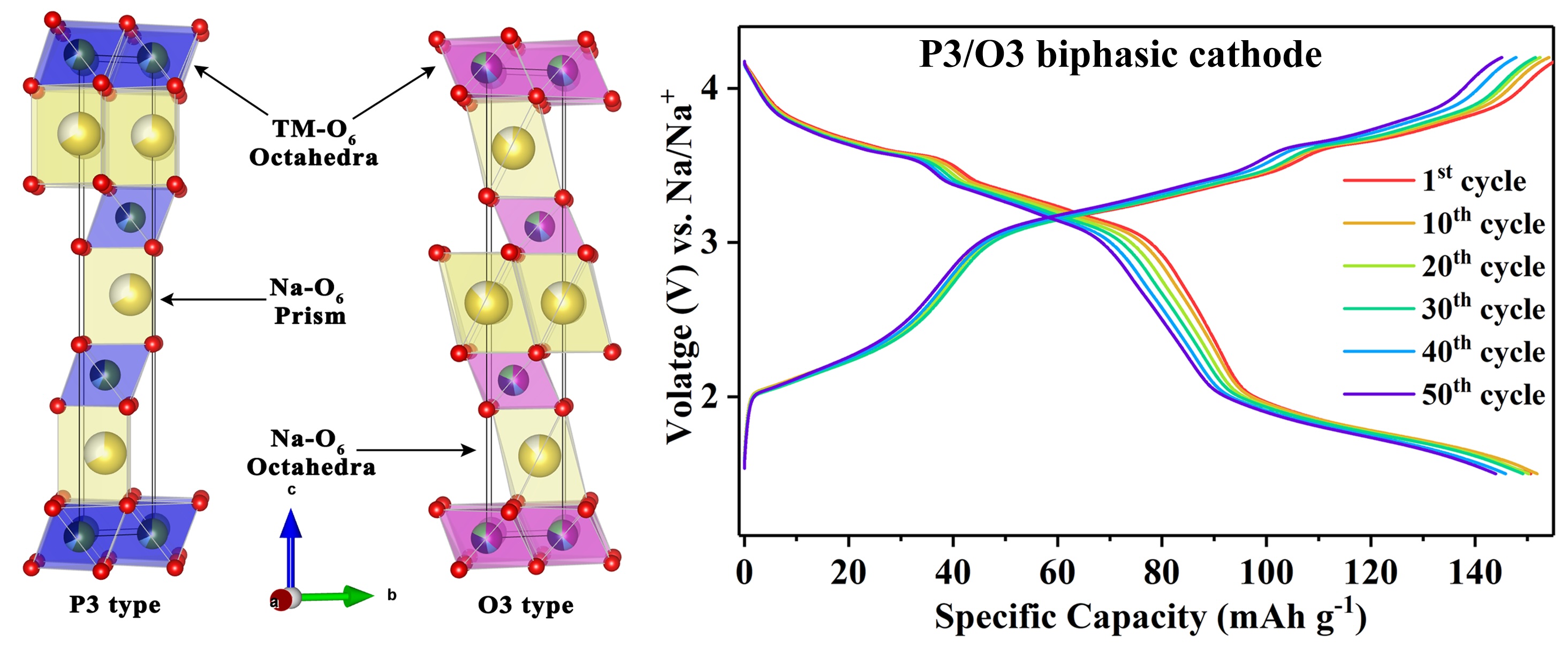
-
Solid Electrolytes for Li/Na Batteries
Developing highly conductive and electrochemically stable solid electrolytes to replace flammable organic liquids is crucial to enable the next generation of safe, all-solid-state lithium and sodium batteries.
Our group is exploring various ceramic, polymer, and composite materials as potential solid electrolytes. Composite electrolytes provide a synergistic combination of mechanical flexibility needed for good electrode-electrolyte contact and the high ionic conductivity required for high-rate performance.
By mitigating interfacial resistance through facile solid electrolyte-cathode interface designs and suppressing dendrite formation, we aim to enable high-voltage, solid-state lithium and sodium metal batteries capable of delivering reliable, long-term cycling performance.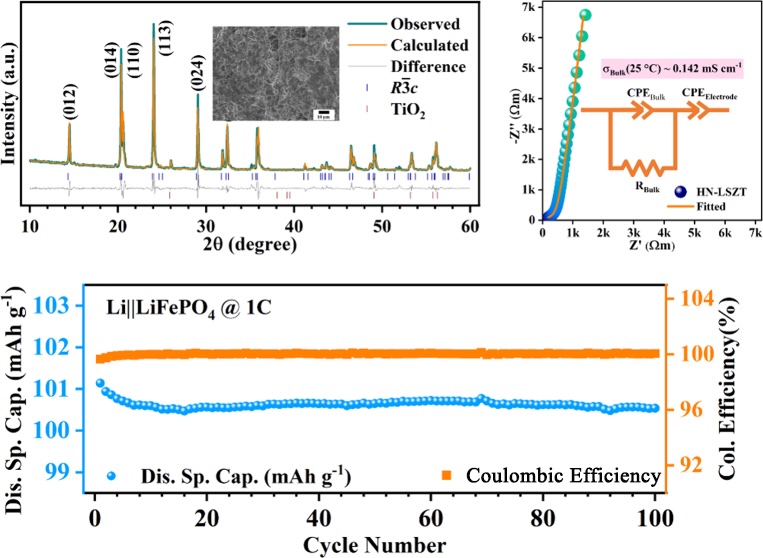
-
Operando Diffraction Measurements for Battery Materials
Operando X-ray diffraction measurements monitor real-time changes in crystal structure during ion intercalation, alloying, or phase-change reactions as the cell is (dis)charged. These measurements could reveal transient intermediate phases that do not appear in ex situ XRD measurements.
Observing phenomena such as phase transformations in P2/O3 layered oxides under active operating conditions allows us to identify sudden volume changes, structural variations, and particle cracking that cause capacity fade and loss of reversibility over cycles.
The insights gained from such measurements are essential for rationally designing electrode materials that exhibit suppressed structural degradation during electrochemical cycling.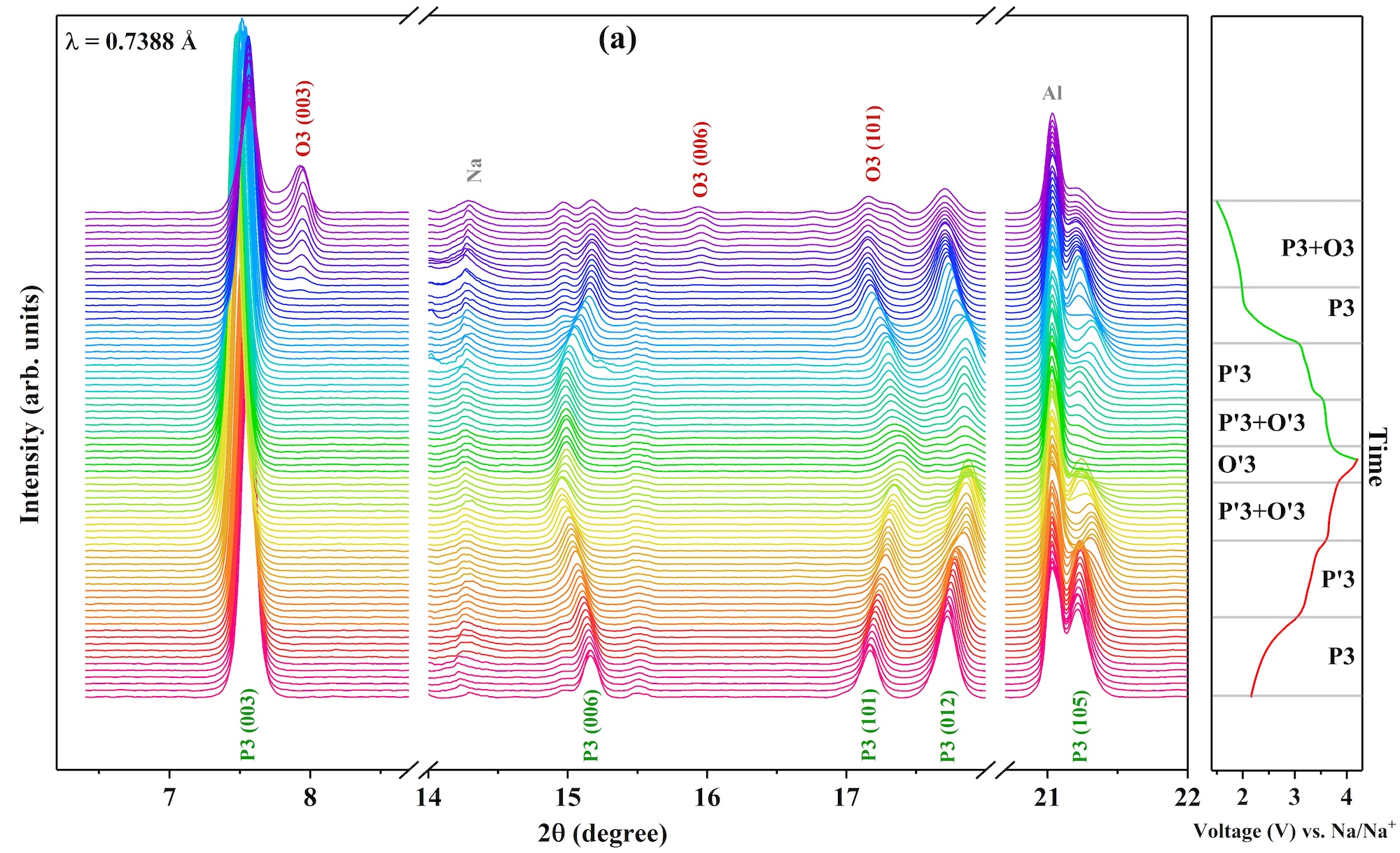
-
In situ Electrochemical Impedance Spectroscopy
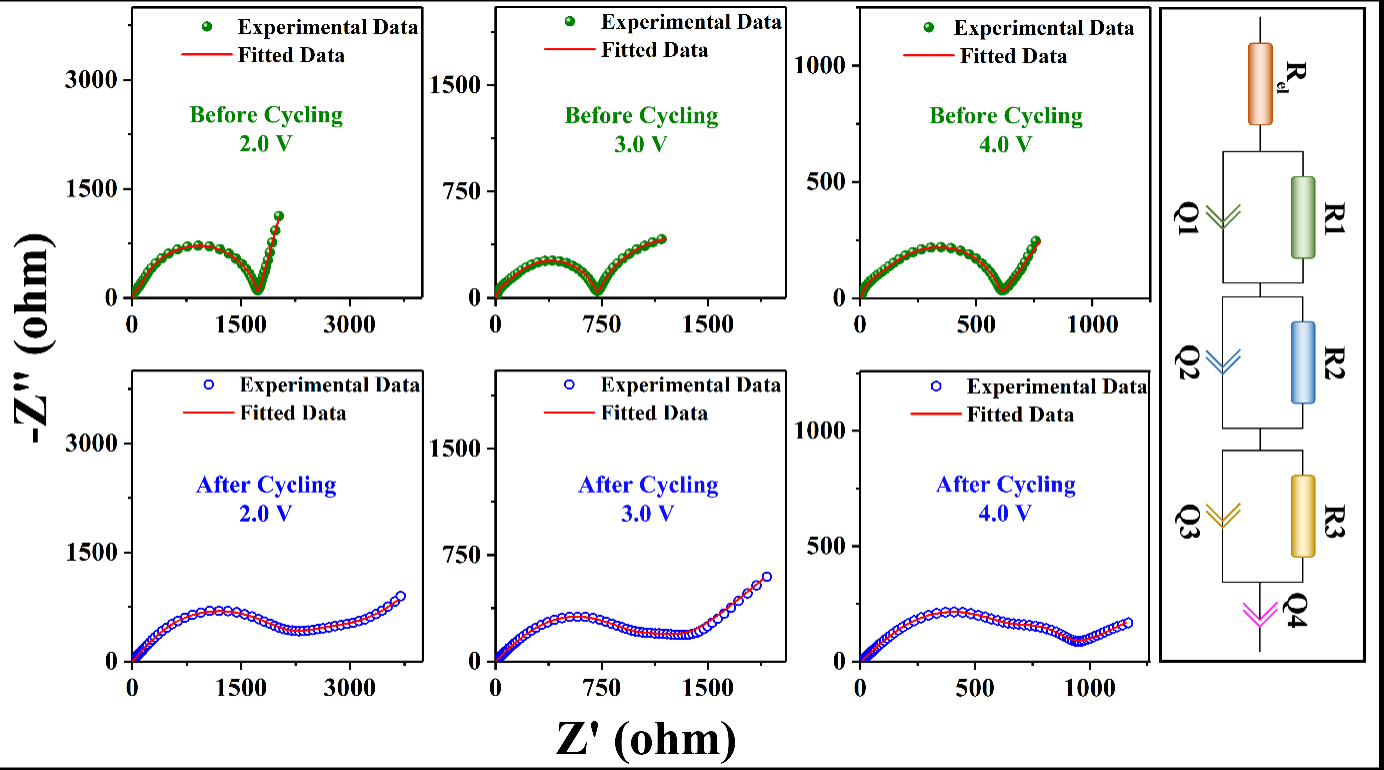
In situ electrochemical impedance spectroscopy (EIS) measurements are used to monitor evolving interfacial kinetics and charge-transfer processes in operating battery cells. This characterization method helps deconvolute and quantify the cell resistances at various states of charge.
We utilize analytical techniques, such as the distribution of relaxation time (DRT) and equivalent circuit modeling of EIS data, to distinguish the timescales of intertwined electrochemical processes (interfacial layers, charge transfer, and ion diffusion in electrodes).
The variation in cell resistances with the state of charge or cycling provides a deeper understanding of the mechanisms responsible for capacity fade and performance bottlenecks during extended cycling.